INSIGHTS24 June 2026
The Data Centre Question
Trimming your own AI footprint is the easy half. The data-centre buildout arrives as a live planning fight in the communities progressives organise.
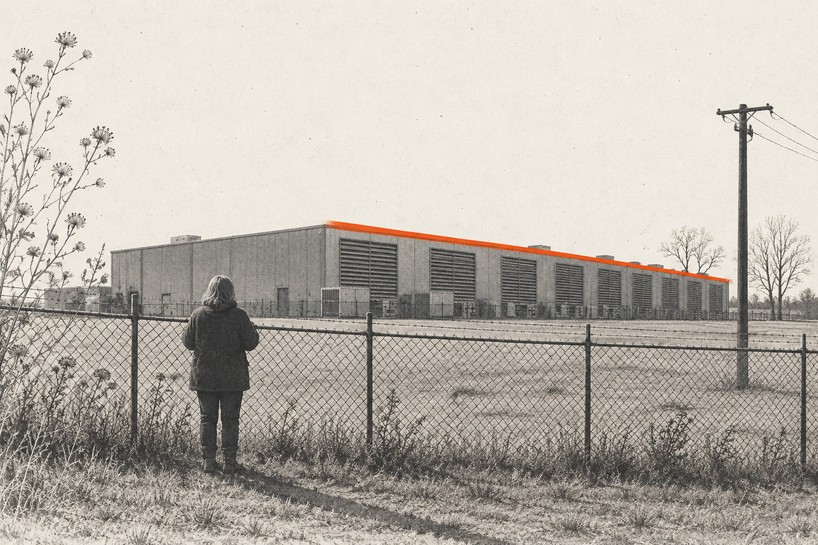
There are two conversations about AI and energy, and they are usually held in different rooms. In one, a communications team wonders whether its drafting habit is a climate problem. In the other, a council chamber in a growth corridor hears objections to a development application for a facility the size of several football fields. Progressive organisations are unusual in having standing in both rooms, and any honest account of AI's footprint has to walk between them.
The footprint you control
Start with the room you are in. The energy cost of AI use is real but wildly uneven across tasks. Text is cheap; images cost more; generated video costs more again, by orders of magnitude. The single most effective habit is refusing the upgrade you do not need: if a paragraph does the persuasive work, do not render it as synthetic video just because the tool makes it possible.
The second habit is right-sizing. Quick drafts, summaries and reformatting do not need a frontier model any more than a trip to the shops needs a road train; smaller models do that work at a fraction of the cost. The third is batching — gathering the month's social drafts into one working session rather than drip-feeding queries all day, which is better for energy and, not incidentally, better for concentration.
Honesty requires scale. An organisation's entire annual prompting is a rounding error beside a single video shoot's flights. The point of these habits is partly the direct saving and mostly the culture: an organisation that practises proportionality in its own tools finds it easier to demand proportionality from an industry. Guilt is not the goal. Coherence is.
The buildout you do not control
Because the larger footprint was never in your settings menu. It sits in the data-centre buildout — the physical construction of the computing estate — and it is arriving in Australia during the most delicate decade of the energy transition. New facilities represent enormous new electricity demand landing on a grid that is trying to retire coal and build renewables at the same time. Every megawatt claimed by new computing is a megawatt the transition must find twice: once for the load, once for the retirement the load displaces. Add water for cooling in a drought-prone country, and the shape of the political question emerges.
Where it lands
It does not land abstractly. Facilities need cheap land, transmission and fibre, which points them at the same growth corridors where housing, logistics and new suburbs already compete for land, water and grid connections — Western Sydney being the obvious case. Councils in these corridors are now fielding development applications with unfamiliar profiles: construction job numbers that look large and fall to modest operating headcounts, big draws on local infrastructure, and community benefit cases that deserve scrutiny line by line.
These are the classic siting questions progressives have organised around for a century — who benefits, who bears the cost, who decided — wearing new branding. Residents lodging planning objections, councillors weighing amenity against investment, communities asking what the facility gives back: none of this stays a tech-policy niche. It is doorstep politics in the electorates where movements already work, and the coalitions it produces are unpredictable — boosters talking jobs and sovereign capability, sceptics talking water tables, civil libertarians asking what, exactly, will be computed inside.
Holding both at once
It can feel contradictory to draft with a model on Monday and object to a data-centre application on Tuesday. It is not. It is the posture movements have always taken toward industry: use what serves the work, and organise to make the infrastructure answer to the public. Nobody calls it hypocrisy to ride a train and demand better rail.
The practical version of coherence is modest. Count your AI use honestly in whatever climate accounting your organisation keeps, and let the habits above keep it small. Then show up to the other room: read the development application, ask the grid questions, back the residents' groups doing the unglamorous submission-writing. The footprint you control is a discipline. The buildout you do not control is a campaign — and it has already started without you.
SEE WHAT PROGRESS CAN DO IN YOUR CAMPAIGN
Book a demo and we'll show Progress working inside one of your own campaigns.