CAMPAIGN WORKFLOWS17 June 2026
Audit Your Email Program in an Afternoon
Turn a year of your own fundraising sends into a dataset, and let an assistant surface the patterns the team can no longer see.
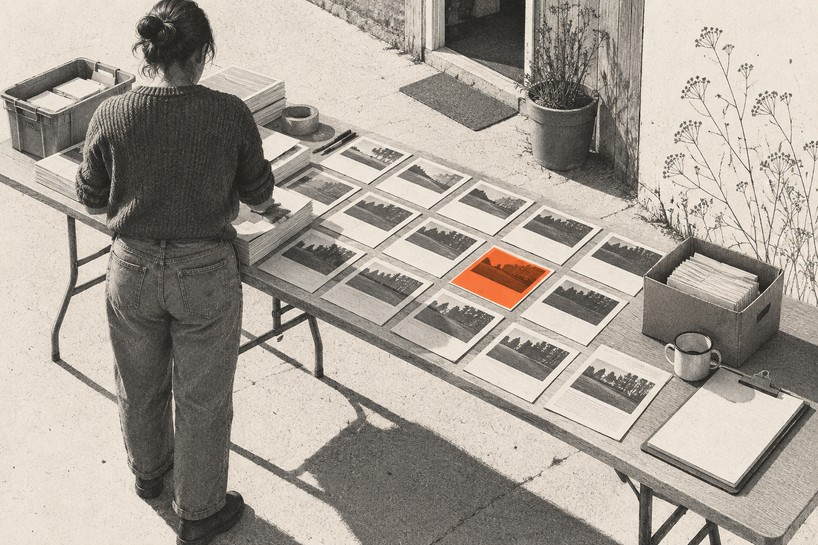
Email fundraising programs accrete. Each send is written under deadline, shaped by whatever worked last month and whatever the campaign needed that week, and then never read again. After a year the program has a personality nobody chose — a default ask, a habitual register, a rhythm of urgency that the people inside it can no longer hear because they have been humming it too long. Reading a year of your own sends end to end would take days no fundraiser has. An assistant can do the reading in an afternoon, if you feed it properly.
Assemble the corpus
The audit is only as honest as the corpus, and the corpus has to be your own. The clean path is an export from your broadcast platform — every send, with its subject line, date and body, straight from the system of record. The scrappier path works too: the subscriptions inbox you have been quietly keeping, an address signed up to your own lists precisely so that somewhere, the program's full output exists as a reader received it. Either way, aim for at least twelve months. A shorter window misses the seasons, and in Australian fundraising the seasons are the story — the end-of-financial-year build to 30 June, and the deadline spikes around campaign moments.
From pile to dataset
A folder of emails is evidence; it is not yet data. The first structuring pass hands the pile to an assistant with a narrow brief: extract, for every message, the send date, the subject line, the sender name it went out under, the ask — donation, petition, event, survey, or none — and a one-line note on the framing. The result is a table with one row per send, and even before any analysis it tends to deliver the first finding: most teams discover their calendar was lumpier, and their sender rotation narrower, than anyone believed.
The metadata table then needs the message bodies beside it, and this is a job for a lightweight automation rather than an afternoon of pasting. A simple workflow walks the list, pulls the full text of each message, and writes it into the sheet next to its row — sender, subject, date, body, one line per send. An hour of setup, a few minutes of running, and the program's entire output for a year sits in a single structured file.
Brief the analyst, then ask the hard questions
Handed a corpus cold, an assistant produces summaries. Handed a corpus with context, it produces analysis. So the brief matters: alongside the dataset, load in what the program is trying to achieve, any guidance you trust on what strong fundraising email looks like, and the documentation for the broadcast platform you use — so the analysis lands as recommendations someone could actually implement, not abstractions.
Then ask the questions a busy team never gets to sit with. How often are we actually sending, and how does the cadence move across the year? What is the balance of asks to value — of messages that want something to messages that give something? Which frames are we leaning on, and which have quietly become the only note we play? What do the EOFY fortnight and the campaign-deadline weeks really look like from a subscriber's side of the inbox? And where, on the evidence of frequency and repetition, is fatigue most likely already setting in? The pattern analysis that comes back reads like a strategic review — specific, referenced to real sends, and occasionally uncomfortable.
Hypotheses, not verdicts
Which is exactly the point at which the audit must change hands. The analysis knows the corpus; it does not know the program. It cannot see the revenue that justified December's cadence, the supporter research behind a frame that looks repetitive from outside, or the board dynamics around a sensitive appeal. Every finding is a hypothesis, and the person who knows the list, the donors and the history decides which hypotheses become changes — ideally one at a time, measured, so the program learns something real from each. An afternoon with an assistant can show you your own reflection with unusual clarity. What you do about the reflection remains, as it should, a human call.
SEE WHAT PROGRESS CAN DO IN YOUR CAMPAIGN
Book a demo and we'll show Progress working inside one of your own campaigns.